Saturday, August 10, 2013
Ryan Ohlin - The Last of the Mohicans
I am choosing to read The Last of the Mohicans because I am interested in the Frenh and Induand war. This book and movie combination also looks like the most entertaining of the summer reading choices.


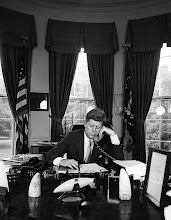
Rozsa Gomory: The President Calling JFK
I listened to John F Kennedy and the segregation issue at the University of Mississippi. Former air force veteran and African American man, James Meredith tried to register police blockaded the school and he was unable to register. President Kennedy saw this as an absolute crisis because the United States senate had outlawed segregation in schools eight years previously. Meredith was blocked from registration by the governor of Mississippi himself, Ross Barnett. Eventually Meredith was able to attend the University of Mississippi. I think President Kennedy was acting as a man of honor because he was fighting for what he thought was right, he was fighting for an air force veteran to attend a university. I also really enjoyed listening to this information on a podcast because I thought it was very interesting and informative.
Marjory (Natasha) Junkermeier-Kennedy
I listened to Kennedy's speech first, and I thought he sounded very unemotional and that he didn't really care about the issue even though it is a very controversial, emotional, important issue. His tone made me feel like the issue didn't matter and that he didn't care which way it went.
I definitely changed my mind when I heard the phone conversations because he was speaking faster and interrupting Barnett. He wanted to make sure he got his point across. Barnett seemed to oppose everything Kennedy was saying. He didn't seem enthusiastic about doing what needed to be done to get Meredith into school, like her really just wanted to end the violence as fast as he could and he didn't care if that meant going against the constitution.
I definitely changed my mind when I heard the phone conversations because he was speaking faster and interrupting Barnett. He wanted to make sure he got his point across. Barnett seemed to oppose everything Kennedy was saying. He didn't seem enthusiastic about doing what needed to be done to get Meredith into school, like her really just wanted to end the violence as fast as he could and he didn't care if that meant going against the constitution.
Florjena Sulollari- The President Calling
I chose to listen to, and read the transcripts for,
the discussions between both Bobby and John F. Kennedy and Governor
Barnett and his aides regarding the Mississippi Crisis. I have always
found John F. Kennedy to be a fascinating president, as he served at a
pivotal time in American history, with segregation finally coming to a
head, the "threat" of communism, space exploration, as well as his
untimely demise. Politically, JFK always seemed to be a man of great
morality, although his private life was of course very tainted, as so
many modern politician's lives are. The Mississippi Crisis was quite
interesting as well,I had seen images of James Meredith being escorted
onto campus, but had never realized all of the back story behind it.
Calvin Carlson- The President Calling
I listened to Nixon addressing the nation after the Watergate scandal. Throughout the speech, Nixon names off various people who resign from their positions due to this scandal and how those people are very good at what they do and Nixon is saddened by their leaving. This makes the listener wonder about how much the individuals close to the scandal know about what really happened and if those people are resigning on the fact that they want to leave before more information leaks about what happened or before they are forced to leave. To me, these people that are leaving know what is going to happen and are just trying to get out as soon as they can before matters get even more out of hand.
Connor McClellan- The President Calling
I listened to President John F. Kennedy negotiate with Ross Barnett, as he debated the conditions of James Meredith's admission to the University of Mississippi. Kennedy's interests were maintaining law and order in Mississippi, to prevent riots and unnecessary violence. Kennedy took multiple, careful measures to achieve his goals, no matter how the negotiations with Governor Barnett went. The secret recordings of the phone conversations between Kennedy and Barnett were a fallback for the president to use if he could not successfully come to a reasonable agreement. While talking to Barnett, Kennedy kept a calm and confident attitude. He respected the governor's opinions and position but made it clear that, as president, he had duties and responsibilities to carry out as well, and he was intent on enforcing the Supreme Court's ruling. As soon as Barnett strayed from the agreed upon course of action, Kennedy immediately threatened to publicly release the negotiations between himself and the governor. Doing so would have put Barnett in a compromising position, as his selfish interests of popularity with his state would have been exposed. However, releasing the tapes would have put Kennedy in a position of power. The people would see him as a man of honor, preserving the integrity of the nation and attempting to prevent any bloodshed. This skillful move by Kennedy made it clear to Barnett that he had lost, and had to comply to preserve his position in government.
Grace Choi - The President's Calling
I listened to the speech given to the congress by Lyndon B. Johnson. He addresses the nation's loss of Kennedy, after his assassination. Johnson really makes recognition of the great late president. All of Kennedy's achievements through out his position in office is recalled by Johnson, from the race to space and partnerships across the seas, education to all children and more is spoken of. Continuing on Johnson speaks of how the nation really was affected by Kennedy being in office and his great over comings for the better of the nation. While listening to this speech one thing came to mind, and that at this exact time of the speech, how the people felt when losing a great president. If on man had made a nation so different through great accomplishments that the whole nation would have pride in, then nothing should have the nation to stop and only remember the past, but really to look forward like Johnson said during the majority of the end of his speech. It was a heartening speech that Johnson have to congress to honor the late president as well as encouraging to move forward for America shouldn't just stop and fall apart.
Andy Asher: The President Calling
I listened to president John F. Kennedy consult the governor of Mississippi Ross Barnett, about admitting James Meredith into the University of Mississippi. Meredith, who was African American, caused some controversy amongst citizens in Oxford who didn't want an African American attending Ole Miss. It was interesting to hear the president talking to Barnett because this showed how Kennedy dealt with the situation and avoided mass bloodshed. Kennedy was able to convince Barnett to allow Meredith into Ole Miss by threatening to reveal details of their "secret" agreement.
Breanne Gottberg-Harris; Johnson
I listened to Johnson's recordings about sending more troops to Vietnam and well as him foreseeing failure in Vietnam with the treaty that they had going on. Johnson seemed like he was more honorable than he was politician because in the first recording I listened to, Johnson didn't want to send in troops if they were just going to end up dying, without a real reason. In the second recording, Johnson seemed concerned about how he was going to get his troops out of Vietnam. At a point in the second recording, his politician "came out" while his secretary, McNamara, and he were discussing who they could send to Vietnam, to sort out the treaty issues as well as him being worried that the American public being critical of them. Johnson seems like he was an honorable politician, a mix of both traits, that we don't see in many politicians anymore.
Sean Isenberg President Calling
The way Nixon acts during his interview lends nothing to his credibility whatsoever. He makes no effort to try and hide his emotions which is pretty wrong considering he has to make these decisions and stick with them because thats his job. He seems to be kind of matter-of0fact about the whole bombing thing and the laughs at the end made me confused about what he thought about them at all. This is why no one likes Nixon
Erik Isenberg President Calling
It was really cool to see all tree different reactions to the vietnam war. Of the three, I like nixon the least because all the stuff he says is just manipulative and he only seems to be looking to cover himself and not what's good for the country.
Leah Langston- The President Calling
President Nixon: Bombing for Peace
Initially, President Nixon seems to be very curt and dry. He sounds sullen and stressed while discussing the release of an announcement regarding a bombing that is to take place. Nixon saw the Vietnam war as unwinnable and was, at first, very obviously unhappy, as he should have been, to be making a move in a war that he saw no end to. Just by listening to his voice, the anxiety and pressure involved in being the President is obvious. Nixon repeatedly references an inauguration, I believe he is referring to his own inauguration into his second term as President. This bombing was not a first, nor would it be a last. Nixon instituted carpet bombing, bombing large areas between North and South Vietnam repeatedly. As the recording continues Nixon seems to be taking the topic more lightly and is more concerned with the possibility of dampening the mood of his inauguration than he is about the havoc the bombings will reap on Vietnam. Carpet bombing was very controversial among Americans, and Nixon did not want his bombings to sour the “flavor” of his inauguration, so the release of the news of yet another bombing was being planned around the event. As the conversation progresses, Nixon throws in a chuckle or two, which could be viewed as extremely inappropriate considering the topic at hand. The entire conversation is cloaked in deceit.
Initially, President Nixon seems to be very curt and dry. He sounds sullen and stressed while discussing the release of an announcement regarding a bombing that is to take place. Nixon saw the Vietnam war as unwinnable and was, at first, very obviously unhappy, as he should have been, to be making a move in a war that he saw no end to. Just by listening to his voice, the anxiety and pressure involved in being the President is obvious. Nixon repeatedly references an inauguration, I believe he is referring to his own inauguration into his second term as President. This bombing was not a first, nor would it be a last. Nixon instituted carpet bombing, bombing large areas between North and South Vietnam repeatedly. As the recording continues Nixon seems to be taking the topic more lightly and is more concerned with the possibility of dampening the mood of his inauguration than he is about the havoc the bombings will reap on Vietnam. Carpet bombing was very controversial among Americans, and Nixon did not want his bombings to sour the “flavor” of his inauguration, so the release of the news of yet another bombing was being planned around the event. As the conversation progresses, Nixon throws in a chuckle or two, which could be viewed as extremely inappropriate considering the topic at hand. The entire conversation is cloaked in deceit.
Friday, August 9, 2013
Abby Ellingsen: President Calling podcast
I decided to listen to 15 minutes of JFK and his phone conversations with Ross Barnett about the Mississippi Crisis. When I realized that these phone conversations I was listening to were all secretly recorded I found it to be kind of an underhanded move by Kennedy, but when listening to more I found that it was a good idea on his part. All the time when he was talking to Governor Barnett, Kennedys main focus was the safety of Meredith and the safety of the state police and to make sure at all times that no mobs were formed. Unfortunately in one of the phone conversations we found out that one state police officer was killed because of a riot while trying to remove Meredith from the university. When Kennedy addresses the nation about the final decision of Meredith being accepted into the university and being allowed to study there, he seems to have some sympathy in his voice towards the people who didn't want Meredith going to an once all-white university, but then tells them that this is a step in the right direction for the nation and that with this the nation can grow.
Maryl Pritt- The President's Calling, John F. Kennedy.
I listened to phone conversations between President John F. Kennedy and Governor Barnett. These phone calls were about James Meridith who was a colored man whom had applied for college at the University of Mississippi. President Kennedy handled the situation very well and made many smart decisions such as not bringing in armed troops in hopes to keep the uproar to a bare minimum. President Kennedy was against segregation, so he had a determination to get Meridith into college, making him the first black man to be accepted into college. I did not like listening to a podcast though due to my short attention span and inability to only be able to listen to the podcast, instead of see it.
Patricia Walker- The President Calling
I listened to President John F. Kennedy’s discussions with Governor
Barnett about the riots that are happening in Mississippi. John F. Kennedy was
aware that there were riots in Mississippi and wanted Governor Barnet to take
control of the situation to prevent violence. James Meredith was denied access
to the University of Mississippi and people began
expressing their opinions toward the situation. Kennedy noticed that the
Supreme Court’s decision was affecting the actions of the people of Mississippi
and he wanted Governor Barnett to have authorities to take control of the riots
and keep peace in Mississippi. I also listened to the discussion when Kennedy
addressed the nation about the issue in Mississippi. I think this shows that he
was a man of honor and that he cared about the safety of the U.S citizens.
Loren Rykard- The President Calling
Steven Wright: The President Calling
For The President Calling podcasts I chose to listen to
Lyndon B. Johnson and his conversations about the Vietnam Dilemma on May 27,
1964. Just like the opinions of men like Senator Richard Russell, I would be
against the continuation of the involvement in Vietnam. If we began to send
American troops in for attack, as Russell pointed out, then it would lead to a
full ground war in an environment our soldiers are not comfortable with. Not to
mention the possibility of going to war with China if it came to it. I think
Johnson should listen to the majority vote of his peers and avoid making a
larger footprint in Vietnam. This delay of action not only has lead to the deaths
of American soldiers but has even got Johnson worrying about involvement in
Laos as well. Although pushing with guns would make America and LBJ look powerful from a world view, it
would cost a grave fortune of money and lives.
Lisanne van Engelen - The President Calling
I listened to the podcast called “Nixon
Addresses Nation Regarding Scandal”. This was the first time that
he directly addressed the Watergate Affair, and it can be seen that
he does not want to talk about it. After talking about the scandal
for the first 15 minutes of the podcast and how “appalled and
shocked” he was to hear about it, Nixon begins to talk about his
goals and plans for his second term. He was really acting like a
politician, in saying that he “immediately ordered an
investigation” into the scandal and that “the truth should be
brought out, fully, no matter who was involved”. Later on in the
podcast, Nixon says “I must turn my attention to the larger duties
of this office.” By saying this, he shows that he does not want to
discuss this subject. This is the first time that I have listened to
a podcast like this, and I actually enjoyed it. I found it
interesting to learn more about this topic, and in such an easy way.
Christopher Draper, Richard Nixon,President calling
Christopher Draper-President Calling
In "President Nixon's telephone conversation with John
Mitchell" it shows Richard Nixon plan to send a fake list of candidates
from a position on the supreme court, after his first list was leaked and the
public opinion though that he was picking people because of what they are and
not their skill level. This shows that Nixon is willing to lie to the public,
and this plan will probably fail since the list is fake no one will get picked
on it, and people will notices that and Nixon will get called out on it. In
"President Nixon's telephone conversation with John Mitchell" they
disused William Mulligan, a candidate that is being pushed onto the president
because the want for a Catholic on the supreme court. President Nixon likes the
candidate since he is not from Harvard who Nixon believes is producing soft
lawyers. However Nixon declines the candidate from what appears to be the fact
that he did not like how the candidate was forced into him.
Thursday, August 8, 2013
Colby Vaughan- The President Calling, Lyndon B. Johnson
I chose the podcast "LBJ Addresses Congress Days After Assassination," which was a recording of President Johnson's speech to congress following the death of President Kennedy. I chose this topic because it coincided with my summer reading book, Coming of Age in Mississippi by Anne Moody. She was a civil rights activist in Mississippi when Kennedy was assassinated. The murder of the president who was supposed to create equality despite race brought the civil rights movement she was a part of to a dramatic halt. That one event undid her years of work, and the work of others, in a few seconds. Anne described the major impact the assassination had on her, and how she felt like the movement had been crushed in that instant. Johnson, on the other hand, described the impact this had on the future of American society. He recognized that the assassination would be a major speed bump on the path to civil rights, but he continued to instill hope in the hearts of Americans by promising that the murder of President Kennedy would not prevent the civil rights movement from winning its battle. 40 years later, we can see that President Johnson's word was honorable, and that incredibly influential leaders of the civil rights movement, Mrs. Moody included, were way to dedicated to fail.
Subscribe to:
Posts (Atom)